
Traceable Material Selection
We select material grades around payload, wear, cleanability, and document requirements so each EOAT part starts with a defensible specification.
Material Selection Starts From EOAT Function
The right material is not the strongest material on paper. For EOAT parts, buyers usually balance payload mass, grip force, sealing reliability, washdown exposure, wear life, and surface finish. We review material choice against the robot payload, part contact surface, production environment, and inspection requirement before locking the quote.
Lightweight structures
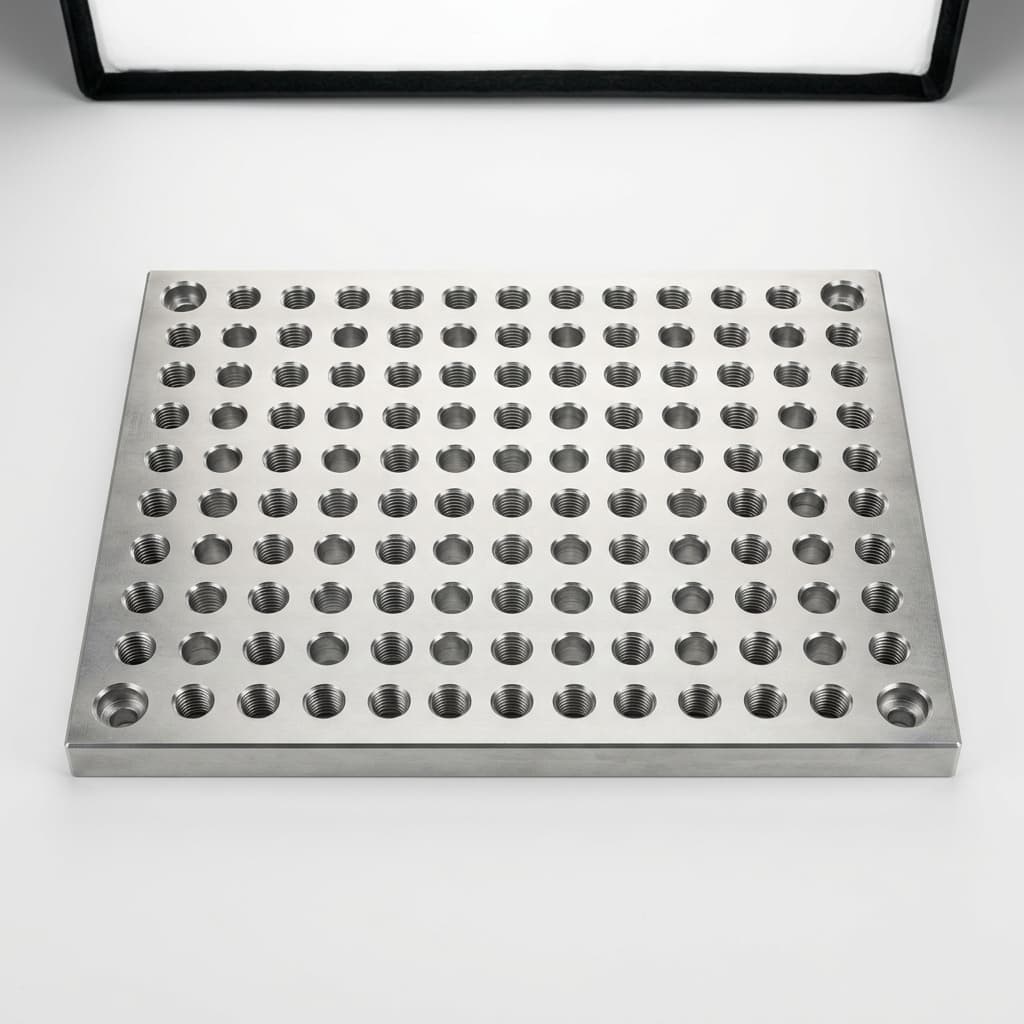
AL6061-T6 and AL7075-T6 keep tool mass low while supporting anodized EOAT frames, brackets, and adapter plates, though 304 stainless steel EOAT brackets and 304 stainless steel EOAT mounting plates are used when washdown or higher strength is required.
Clean or corrosive cells
SUS316L, passivation, and controlled surface finish are usually more relevant than maximum tensile strength.
Non-marring contact
POM, nylon, PEEK, and urethane inserts help protect parts while machined carriers preserve datum accuracy.
Certificate of Analysis (COA) / MTR
Download a redacted sample showing the fields buyers usually request. Real COA/MTR files depend on stock source, heat lot, material grade, PO, and project documentation scope.
Need real material records for a specific PO?
Request Project COA/MTREOAT Material Decision Matrix
Use this matrix to narrow the first RFQ conversation. Final selection still depends on load case, duty cycle, environment, and drawing tolerances.
| Requirement | Often Suitable | Watch Out For | RFQ Note |
|---|---|---|---|
| Low robot payload mass | AL6061-T6, AL7075-T6, titanium for extreme cases | Overusing steel can consume cobot payload and slow cycle time. | Share payload limit and target tool weight. |
| Washdown or chemical exposure | SUS316L, passivated stainless, selected plastics | Some coatings wear quickly if gripper contact is abrasive. | List cleaning agents and temperature range. |
| Non-marring part contact | POM, nylon, urethane, replaceable soft inserts | Plastics creep under load and may need metal carriers. | Send part material, surface finish, and grip force. |
| Vacuum manifold sealing | AL6061-T6 with anodizing or stainless for harsh cells | Port threads, burrs, and sealing faces matter more than bulk strength. | Mark port type, O-ring surfaces, and leak sensitivity. |
Aluminum Alloys
Excellent strength-to-weight ratio and machinability. The standard for most EOAT applications.
Stainless Steel
High tensile strength and excellent corrosion resistance. Ideal for medical or food-grade environments.
Titanium
Exceptional strength and low weight. Used when aluminum is too weak and steel is too heavy.
Engineering Plastics
Lightweight, non-marring, and self-lubricating options for sensitive handling.
Documents Buyers Can Request
Material documents should match the risk level of the part. A simple sensor bracket may only need grade confirmation, while food, medical, or high-load EOAT parts may require a stronger traceability package.
- COA or MTR for batch-level material traceability.
- Surface treatment certificate or finish process confirmation.
- Passivation, anodizing, or plating notes tied to part revision.
- Material substitution approval record if the requested grade is unavailable.
Custom Material Requests
Require a specialized alloy like Inconel, specific temper grades, or specialty ESD plastics? Send us your material specification.
Inquiry Email
Attach your CAD files (STEP, IGES) and tolerances for quick quoting.