We treat your designs, CAD files, and product architectures with strict confidentiality. Our facility is designed to protect OEM trade secrets.
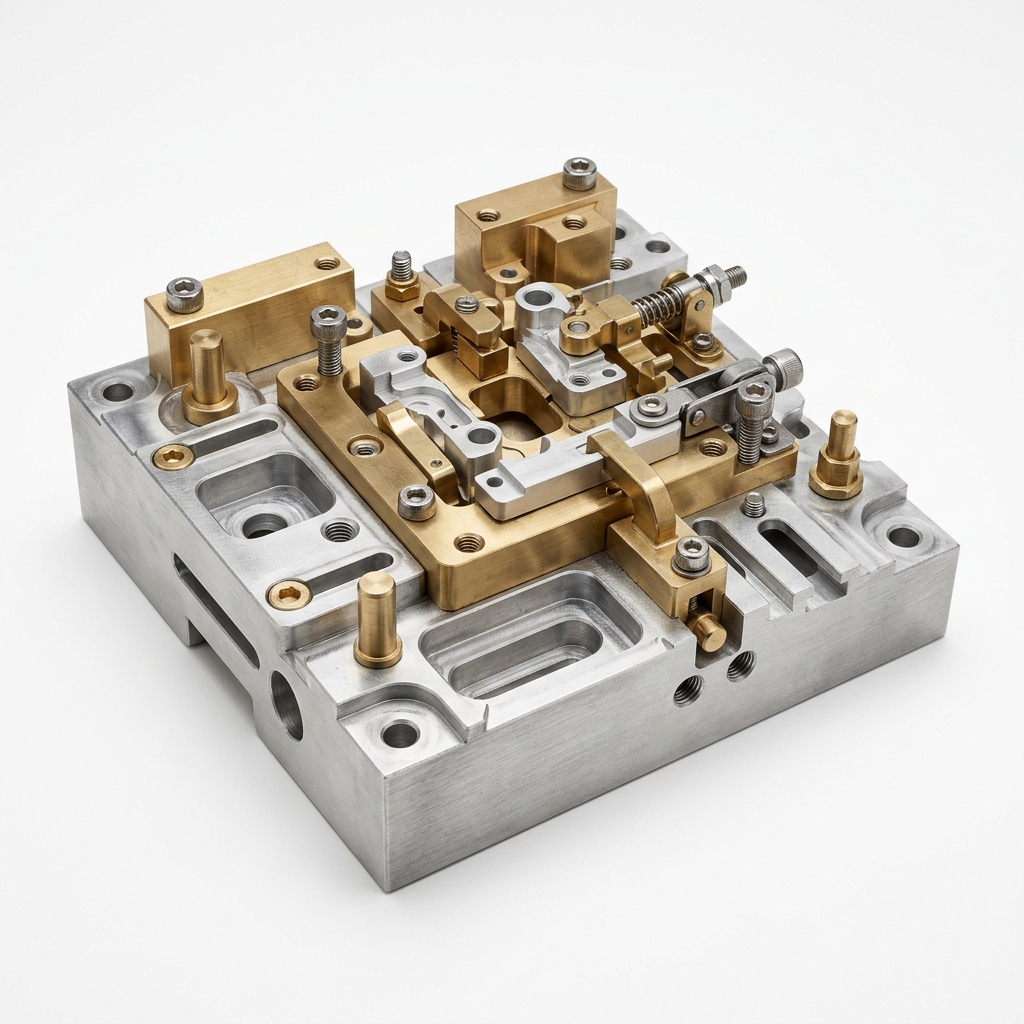
EOAT files often reveal customer product geometry, robot cell layouts, proprietary part nests, and unreleased manufacturing methods. A useful confidentiality process must cover more than the signed NDA. It should also control who can access CAD, how files are labeled internally, and how physical samples are referenced on the shop floor.
| Risk | Control | Buyer Action |
|---|---|---|
| CAD reveals customer product geometry | Mutual NDA before full model review; limit access to project engineering roles. | Send NDA requirements before detailed STEP or assembly files. |
| Shop-floor identification leakage | Internal project codes instead of customer names on WIP trays and inspection records. | Tell us if customer names, product codes, or logos must be removed from drawings. |
| Supplier comparison before source selection | Share redacted drawings first, then release full files after supplier shortlist or NDA completion. | Use simplified envelopes when geometry is sensitive but manufacturability feedback is still needed. |
We are ready to sign Mutual NDAs before you share any functional drawings or 3D models. We respect that EOAT designs contain critical competitive advantages.
Standard Mutual NDA
Download the secure-file preparation checklist, then request our NDA template or send your company format for review. The checklist is operational guidance, not legal advice.
If your team needs an internal handoff template before contacting suppliers, download the RFQ and delivery document checklist. It summarizes the CAD, application, material, inspection, and shipment details that usually affect quote quality.
All CAD files (STEP, IGES, SolidWorks) are stored on isolated, offline engineering servers. Access is strictly limited to the core CAM programming team and project manager. We do not use third-party cloud CAM software.
Physical parts are tracked using internal randomized project codes rather than customer names. Work-in-progress trays and inspection reports refer only to these anonymous codes to prevent shop-floor leaks.
You can start an RFQ without exposing every sensitive detail. In the first message, we usually only need the application type, envelope dimensions, expected material, critical interfaces, quantity range, and any special confidentiality rule. Full customer part geometry, assembly context, native CAD history, and unreleased product names can wait until NDA scope and access rules are confirmed.
If you require us to sign your company's specific NDA format, please email it to us. We typically review and sign within 12 hours.
Inquiry Email
Attach your CAD files (STEP, IGES) and tolerances for quick quoting.
Operated by Magatom Dynamics Co., Ltd.
Legal entity: Magatom Dynamics Co., Ltd.