
Capability evidence without inflated numbers
Machine count, model list, certificate copies, and measuring-equipment details should be confirmed through controlled supplier qualification files when required by your procurement team.
Use this page to judge whether your robot tooling part is a fit for our machining, inspection, material, and export workflow before sending sensitive CAD files.
We avoid unsupported claims such as unverified machine counts or extreme tolerance promises. Instead, we show the capability areas, risk controls, and RFQ evidence that engineering, quality, and procurement teams can validate project by project.


Machine count, model list, certificate copies, and measuring-equipment details should be confirmed through controlled supplier qualification files when required by your procurement team.
FAI, dimensional, and outgoing checks are useful only when they reference the approved drawing revision, CTQ dimensions, material grade, and acceptance scope.
Lead-time, material, finish, inspection, packaging, and export assumptions should be visible before sample approval instead of hidden inside a unit price.
The right route depends on geometry, datum strategy, feature access, tolerance stack-up, and repeat-order expectations. The goal is not to use the most complex machine; it is to protect the features that make the EOAT part work in the cell.
| Route | Typical Scope | Buyer Value | Confirm Before Quote |
|---|---|---|---|
| 3-axis / 4-axis CNC milling | Stable routes for plates, brackets, spacer blocks, simple manifolds, nests, and repeat batches after sample approval. | Controls unit cost and repeatability when most critical features are accessible from standard setups. | Part size, stock shape, datum scheme, setup count, and finish-after-machining requirements. |
| 5-axis strategy for complex EOAT geometry | Used where angled pockets, robot interfaces, lightweight reliefs, or multi-face features create setup risk. | Reduces tolerance stack-up across faces and helps protect interface alignment on complex parts. | Feature accessibility, tool reach, collision risk, wall thickness, and whether tight features need single-setup control. |
| CNC turning and live-tool interface parts | Pins, bushings, shafts, standoffs, threaded inserts, small cylindrical adapters, and rotating interface hardware. | Keeps mating hardware consistent with machined plates, jaws, and fixture assemblies. | Thread standard, surface finish, concentricity, heat treatment, and matching part requirements. |
| Fixture, nest, and assembly machining | Machined nests, soft jaws, locator blocks, wear pads, sacrificial inserts, and custom EOAT assembly details. | Supports application-specific handling where generic catalog EOAT parts do not fit the product geometry. | Sample part availability, contact surfaces, service replacement plan, and non-marring material requirements. |
Tight tolerances are not automatically better. They increase setup, inspection, yield, and lead-time pressure. For EOAT parts, the useful question is which dimensions affect robot interface, workpiece contact, vacuum sealing, fixture location, and service replacement.
| Tier | Use Case | Quote Impact | Buyer Action |
|---|---|---|---|
| General machining tolerance | Non-critical covers, spacer plates, simple brackets | Fastest to quote when drawings are complete | Mark only functional dimensions as CTQ |
| Functional interface tolerance | Robot bores, dowel holes, mating faces, sealing surfaces | Requires inspection route and datum agreement | Define datum structure and acceptance method |
| High-precision / matched-set features | Jaw pairs, bearing bores, tool-change interfaces, nests | May affect setup strategy, yield, and lead time | Send mating parts, gauges, or fixture expectations if needed |
| Post-finish controlled dimensions | Anodized, plated, passivated, or coated functional surfaces | Needs clear before/after-finish measurement rule | State whether dimensions apply before or after treatment |
This matrix helps buyers decide what to include in the first RFQ. It also makes the page useful for AI search and procurement comparison because each capability is tied to an engineering risk and a concrete evidence type.
| Capability Area | Examples | Risk Controlled | Buyer Evidence |
|---|---|---|---|
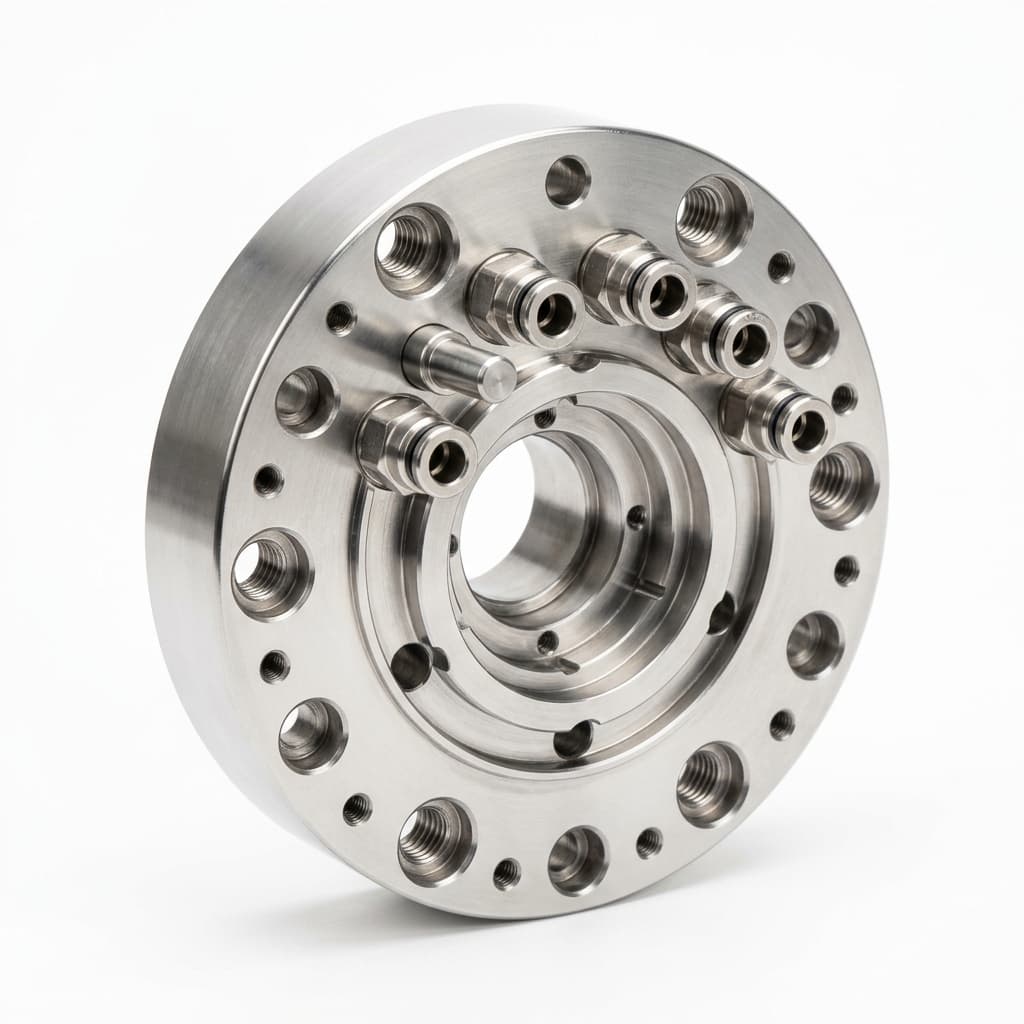
| Robot interface geometry | Bolt circles, dowel bores, flange faces, end effector adapter plates and EOAT adapter plates | Mismatch with robot wrist, tool changer, or downstream fixture | FAI or dimensional checks for agreed CTQ dimensions |
| Lightweight EOAT structures | Pocketed plates, ribbed brackets, thin-wall aluminum carriers | Payload loss, vibration, distortion, or machining chatter | DFM notes on wall thickness, setup route, and inspection points |
| Part-contact tooling | Gripper jaws, 304 stainless EOAT nests, 304 stainless part nest fixtures, pads, soft-touch inserts, profile carriers | Part damage, slip, poor location, inconsistent pickup force | Contact geometry review and matched-set inspection plan |
| Vacuum and pneumatic details | Manifolds, suction-cup mounts, O-ring grooves, ports, channels | Leakage, burr contamination, thread mismatch, poor sealing | Port/thread review, deburring scope, sealing-face checks |
| Clean or regulated applications | Food, medical, electronics, wafer, and cleanroom handling parts | Wrong material, poor finish, missing traceability, cleaning issues | Material record scope, finish notes, COA/MTR request path |
The fastest capability review starts from complete technical context. A drawing alone is often not enough when the part affects robot uptime, validation, or supplier onboarding.
Some risks should be discussed before quotation lock. Surfacing them early saves sample rework and prevents unrealistic lead-time assumptions.
Use these pages when your internal team needs evidence before sending confidential CAD files or releasing a supplier approval package.
Delivery timing depends on drawing completeness, material sourcing, setup route, finish process, inspection scope, documentation, export packaging, and destination. For urgent line-down or prototype-gate work, send the target date and the non-negotiable approval evidence in the first email so the response can separate possible acceleration from technical risk.
A good EOAT machining inquiry should make the part manufacturable, inspectable, and purchasable in the same thread. Use this checklist before sending CAD so the first reply can include useful DFM, lead-time, inspection, and document assumptions.
Machining route, tolerance risk, and feature-level fit review.
FAI, COA/MTR, NDA, onboarding, and RFQ checklist downloads.
CTQ dimensions, dimensional checks, FAI records, and buyer evidence.
Grade selection, COA/MTR support, and finish documentation.
Send the part model, drawing, material, finish, quantity, and CTQ notes. We will respond with DFM questions, likely risk drivers, inspection assumptions, and the documents needed for your supplier review.
Inquiry Email
Attach your CAD files (STEP, IGES) and tolerances for quick quoting.