
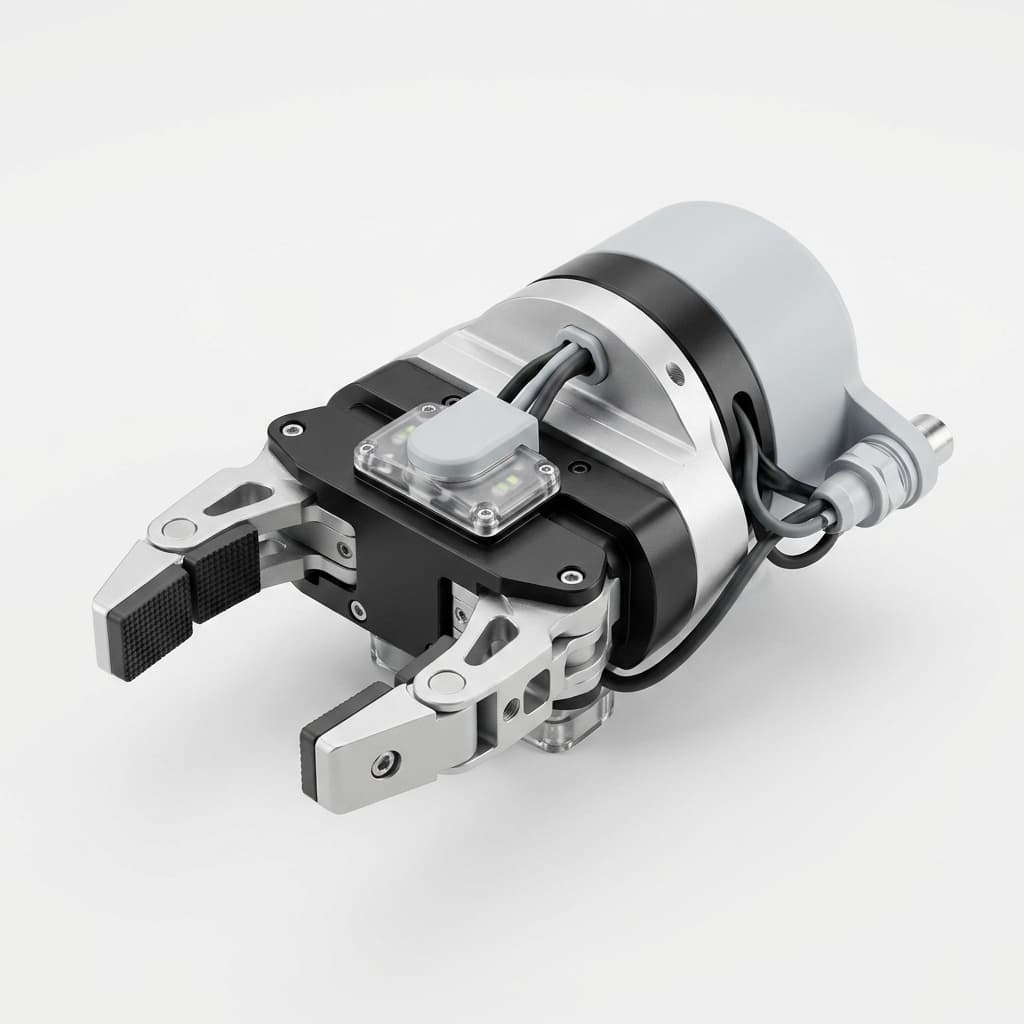
IP69K Hygienic EOAT Machining Guide
Engineer IP69K hygienic EOAT machining for food and pharma robots with 316L, Ra 0.8 um, EHEDG checks, supplier QA, and request-ready RFQ review steps.
Designing and procuring End-of-Arm Tooling (EOAT) for standard manufacturing is challenging enough. But when you move that robotic cell into a food processing, dairy, or pharmaceutical environment, the rules change entirely. In these sectors, a single microscopic crevice isn't just a design flaw—it's a bacterial harborage point that can trigger product recalls and fail facility audits.
TL;DR (Executive Summary): To survive daily IP69K washdown cycles (1450 PSI at 80°C), EOAT must be CNC machined with strict hygienic design principles. This means utilizing 316L stainless steel, achieving a surface roughness of Ra ≤ 0.8 µm, eliminating exposed threads, and avoiding blind holes. Relying on standard grippers or off-the-shelf 3D printed components is an unacceptable risk for FDA and EHEDG-compliant environments.
Reviewed scope: June 23, 2026. This guide is written for automation engineers, quality teams, and procurement teams specifying EOAT machining for food, dairy, pharmaceutical, and cleanroom-adjacent robot cells. It is not a certification substitute: final acceptance still depends on your product contact map, local regulator, customer audit protocol, cleaning chemistry, robot OEM documentation, and validation records.
RFQ shortcut: If you already have CAD, send the model with your washdown zone, material certificates, Ra requirement, and expected audit standard through Contact / RFQ. For adjacent design context, compare this article with the food, medical, and cleanroom EOAT application page, vacuum manifold machining notes, material selection guide, quality documentation expectations, and compliance documentation page.
The release of EHEDG Guideline 62 has tightened the scrutiny on robotic systems in food processing environments. Retailer-driven audits under BRC and SQF in 2026 are increasingly evaluating equipment design—including the robot's end effector—as a scored element of food safety. This guide covers the critical machining specifications required to build compliance directly into your EOAT.
The Reality of IP69K Washdown Environments
Before detailing the CNC machining requirements, it is crucial for automation engineers and procurement teams to understand what the EOAT is actually being subjected to. The "IP69K" rating is not just "waterproof"; it is a brutal, multi-faceted assault on mechanical hardware.
- Extreme Pressure: 100 bar (1,450 PSI) water jets acting directly on seals, joints, and material surfaces.
- High Temperatures: Washdown water is typically heated to 80°C (176°F), causing rapid thermal expansion and contraction of differing materials (e.g., aluminum vs. plastic).
- Caustic Chemistry: Cleaning-in-Place (CIP) and open-plant cleaning processes utilize aggressive chlorinated alkalines, foaming acids, and sanitizers that rapidly corrode standard aluminum and carbon steel.
When designing a hygienic gripper or suction manifold, every radius, seal, and fastener must be evaluated against these three factors.
Surface Finish: The Ra 0.8 µm Procurement Baseline
The most common failure point in hygienic EOAT procurement is inadequate surface finish. Machining lines, chatter marks, and porous surfaces create microscopic valleys where Listeria and Salmonella thrive, insulated from sanitizing chemicals.
For food contact surfaces, the European Hygienic Engineering and Design Group (EHEDG) and the FDA generally dictate a surface roughness of Ra ≤ 0.8 µm (32 µin). For biopharmaceutical applications following the ASME BPE standard, this tightens further to Ra ≤ 0.38 µm (15 µin).
Achieving this via CNC machining requires specific CAM strategies:
- High-Speed Finish Passes: Using fresh, sharp carbide tooling with high spindle speeds and slow feed rates.
- Electropolishing: Often required post-machining to dissolve the microscopic peaks of the metal, improving the Ra value and creating a passive, corrosion-resistant chromium-oxide layer.
- Bead Blasting Pitfalls: Glass bead blasting is frequently used to make parts look uniform, but it can actually increase bacterial adhesion by creating a micro-cratered surface if not carefully controlled. Electropolishing is vastly superior for hygiene.
Hygienic Design vs. Standard Machining
Material Selection: Beyond "Just Stainless"
While aluminum 6061-T6 is the undisputed king of standard EOAT due to its high strength-to-weight ratio, it is entirely unsuitable for IP69K washdown. Anodizing will quickly strip away under hot caustic chemicals.
- Stainless Steel 316L: The default choice. The "L" stands for low carbon, which prevents carbide precipitation during welding and improves overall corrosion resistance against chlorides (found in many cleaning agents). While heavier than aluminum, it is non-negotiable for primary food contact.
- Stainless Steel 304: Acceptable for non-contact areas, but less resistant to chlorides than 316L. If cost allows, standardize on 316L to prevent mix-ups on the shop floor.
- FDA-Compliant POM-C (Delrin/Acetal): Excellent for weight reduction. It machines beautifully, absorbs very little moisture, and can be used for custom suction cup mounts or lightweight structural brackets. Must be specifically ordered with FDA compliance certs.
- PEEK (Polyether Ether Ketone): Extremely high performance and high temperature resistance, but very expensive. Used for high-wear contact surfaces where metal cannot be used.
- Titanium (Grade 2 or 5): When payload limits are strict but corrosion resistance is mandatory, titanium offers a weight reduction over stainless steel with exceptional chemical resistance, albeit at a significantly higher machining cost.
Engineering Note on Weight: Because 316L is roughly three times denser than aluminum, replacing an aluminum EOAT with a stainless one will drastically alter the payload dynamics. Heavy CNC pocketing and topology optimization are required to keep the robot from faulting on overcurrent errors.
Use the material selection guide for robot grippers when your team must compare 316L, 304, POM-C, PEEK, titanium, and aluminum trade-offs before issuing the RFQ.
Crevice-Free Engineering & Structural Machining
The mechanical geometry of the EOAT is just as scrutinized as the material. A perfectly polished 316L part will still fail an audit if it is shaped in a way that traps water.
- No Blind Holes: If a hole must be drilled, it should be a through-hole whenever possible. If it must be a blind hole, it must be thoroughly sealed.
- Minimum Radii: EHEDG guidelines require inside corners to have a minimum radius of 3mm (larger is better). A sharp 90-degree internal corner machined with a flat endmill cannot be effectively cleaned.
- Sloped Surfaces: Top surfaces must have a minimum slope of 3° (preferably more) to allow water to self-drain. Flat horizontal surfaces pool contaminated water.
- Fastener Elimination: Socket head cap screws (SHCS) are notorious bacterial traps. Hygienic design demands using hex head bolts or domed acorn nuts with FDA-approved blue silicone sealing washers beneath the head.
Detailed Machining Strategy Comparison Matrix
| EOAT Feature | Standard Machining Approach | Hygienic (EHEDG/FDA) Machining Approach | Risk if Standard is Used |
|---|---|---|---|
| Inside Corners | Sharp 90° using flat endmill | R3.0mm minimum radius using ball-nose | Bacterial accumulation in unreachable corners. |
| Top Surfaces | Flat & horizontal | Sloped at > 3° angle | Water pooling leading to pathogen incubation. |
| Pneumatic Lines | Push-to-connect fittings & PUR tubing | Internal drilled manifolds / sealed stainless fittings | Tubing crevices trap bacteria; washdown pressure blows lines out. |
| Fasteners | Recessed socket head cap screws | Flush or domed hex heads with FDA seal rings | Hex socket fills with meat/dairy residue and cannot be jetted out. |
| Mating Surfaces | Direct metal-to-metal flat bolting | Engineered O-ring grooves with FDA silicone/Viton | Capillary action draws contaminated water between plates. |
| Surface Finish | As-machined (Ra 1.6 - 3.2 µm) | Polished/Electropolished (Ra ≤ 0.8 µm) | Biofilm adhesion to microscopic machining ridges. |
| Material | Aluminum 6061-T6 (Anodized) | Stainless Steel 316L or FDA POM-C | Caustic washdown strips anodizing and dissolves aluminum. |
| Engraving/Marking | Stamped or deep laser engraved | Laser annealed (smooth) or omitted | Engraved grooves become permanent bacterial traps. |
Failure Risks and Buyer Decision Points
Procurement teams must weigh the initial cost of a hygienically designed EOAT against the Total Cost of Ownership (TCO) and the catastrophic risks of non-compliance.
When evaluating quotes from CNC machining partners for your robotic end effectors, consider the following decision points and failure risks:
- The Cost of Recalls vs. Tooling Costs: A standard aluminum EOAT might cost $2,000, while a 316L electropolished version might cost $6,500. However, a single USDA-mandated recall due to Listeria traced back to an EOAT crevice can cost millions in direct losses, brand damage, and facility downtime.
- Audit Failures: Retailers are increasingly demanding BRC and SQF audits that closely inspect automation equipment. An inspector finding a recessed bolt on a robot arm can halt production until the equipment is remediated.
- Payload Optimization: Buyers should ask their CNC supplier: "How are you reducing the weight of this 316L part without creating new crevices?" The supplier should offer advanced lightweighting techniques such as enclosed hollow structures or extensive backside pocketing that is permanently sealed.
- Maintenance Frequency: A well-machined IP69K EOAT requires fewer teardowns for deep cleaning. Off-the-shelf grippers often require weekly disassembly to clean out trapped meat or dairy residues, creating significant labor costs over a year.
EOAT Sourcing & Procurement Decision Matrix
To ensure you are selecting the right machining partner, evaluate them against these criteria:
| Evaluation Criteria | Red Flag (Do Not Buy) | Green Flag (Preferred Supplier) | Engineering Justification |
|---|---|---|---|
| Material Certification | "We use standard 300-series stainless." | Provides EN 10204 3.1 Mill Certs for 316L. | 304 stainless will pit over time in chloride environments; 316L is mandatory. |
| Surface Finish Verification | Visual inspection only ("It looks shiny"). | Provides a profilometer report for Ra ≤ 0.8 µm. | Microscopic crevices invisible to the eye can harbor pathogens. |
| Design Assistance | Machines the CAD exactly as provided, including sharp corners. | Flags sharp corners and suggests R3.0mm radii. | A partner familiar with EHEDG will prevent bad designs from reaching the floor. |
| Fastener Hardware | Sources standard zinc-plated SHCS. | Includes hygienic EHEDG-certified domed nuts and seals. | Hygienic hardware is specialized and ensures the entire assembly is compliant. |
| Welding/Joining | Leaves visible, unpolished weld seams. | TIG welds are ground flush, polished, and passivated. | Unpolished welds are immediate audit failures due to porosity. |
| Plastics Machining | Uses standard black Delrin. | Uses and provides certs for FDA-compliant blue POM-C. | Visual detectability (blue color) and chemical safety are required for plastics. |
| Post-Processing | Relies on glass bead blasting. | Offers in-house or certified electropolishing. | Blasting creates micro-craters; electropolishing dissolves peaks for true hygiene. |
| Lead Times | Cannot accommodate expedited washdown tooling. | Maintains 316L and POM-C billet inventory. | Food plants often need emergency replacements during critical breakdowns. |
Procurement QA Checklist for Hygienic EOAT
When outsourcing the CNC machining of hygienic end effectors, procurement teams cannot treat the PO like a standard metal part. Require the following from your machining partner:
- Material Certification (EN 10204 3.1): Traceable mill certificates proving the alloy is genuinely 316L and not a cheaper substitute.
- Surface Roughness Report: A physical profilometer measurement confirming Ra ≤ 0.8 µm on all specified food-contact surfaces.
- FDA/EU Food Contact Declarations: For any plastics (like POM-C) or elastomers (O-rings) used in the assembly.
- Passivation/Electropolishing Cert: Documentation that the stainless steel has been properly passivated (e.g., per ASTM A967) to restore the passive oxide layer after machining.
- First Article Inspection (FAI) on Radii: Verification via CMM or optical comparator that all internal corners meet the minimum 3mm radius specification.
- Hygienic Hardware Validation: Ensure all cap nuts, standoffs, and mounting hardware match the IP69K hygienic spec before final sign-off.
- Payload Verification: Confirm the final machined assembly weight is within the robot's safe operating limits before installation.
Acceptance Evidence to Request Before Release
An audit-ready hygienic EOAT package should connect each claim to a record. Ask suppliers to identify who owns the evidence, where it is stored, and whether it is part-specific or a generic certificate.
| Evidence Item | Owner | Applies To | Minimum Acceptance Standard |
|---|---|---|---|
| Material traceability | Machining supplier | 316L, titanium, PEEK, POM-C | Heat/lot traceable certs tied to the part traveler |
| Surface finish report | Supplier quality | Food-contact and splash-zone machined surfaces | Profilometer readings at drawing-defined locations |
| Passivation/electropolish certificate | Finishing supplier | Stainless EOAT bodies, brackets, manifolds | Process record tied to part number and revision |
| Seal material declaration | Component supplier | O-rings, washers, gaskets, cup interfaces | Food-contact declaration matching cleaning chemistry |
| Geometry inspection | Supplier quality | Radii, drain slopes, sealing grooves, interfaces | FAI/CMM notes for hygienic and robot-interface CTQs |
| Cleanability review | Buyer engineering + sanitation | Assembled EOAT | No hidden blind holes, exposed threads, pooling ledges, or cable-tie traps |
| Payload and TCP check | Automation integrator | Final assembled tool | Robot model, payload, inertia, and TCP update recorded before production |
| Maintenance plan | Plant engineering | Spare parts and cleaning access | Replacement intervals and re-polish/replacement triggers documented |
Treat visual shininess as a weak proxy. For food-contact or pharma-adjacent parts, acceptance should be based on drawing notes, measured roughness, certificate traceability, and a cleanability review of the assembled tool.
Frequently Asked Questions (FAQ)
Q: Can we use 3D printing for food-grade EOAT instead of CNC machining? A: Generally, no. Standard FDM (Fused Deposition Modeling) creates porous, layered structures that act as sponges for bacteria. While some SLS or specialized resins claim food-contact compliance, the rigorous nature of 100 bar IP69K washdown often degrades printed plastics quickly. CNC machining solid billet POM-C or 316L remains the safest path for production.
Q: Does the entire robot need to be IP69K, or just the end effector? A: Ideally, the entire robotic arm should be IP69K rated (e.g., specific washdown cobots). However, the EOAT is typically the component closest to—or directly manipulating—the open food product, making its hygienic design the absolute most critical part of the workcell. If the robot arm itself is only IP67, it will require a secondary protective jacket.
Q: How do we handle pneumatic grippers in a washdown environment? A: Standard pneumatic grippers will fail rapidly due to water ingress. You must specify IP69K rated, sealed grippers from manufacturers. From a machining standpoint, creating a protective, sealed stainless-steel cowl or enclosure around standard pneumatics is a common alternative. Furthermore, positive air pressure inside the cowl can prevent moisture ingress.
Q: Why is 316L preferred over 304 stainless steel? A: 316L contains Molybdenum, which drastically increases its resistance to pitting and crevice corrosion in chloride-containing environments. Since many sanitation chemicals are chlorine-based, 304 stainless will often begin to pit and rust over time, failing visual audits.
Q: How often does an IP69K EOAT need to be replaced or re-polished? A: With proper maintenance and avoiding metal-on-metal collisions, a 316L electropolished EOAT can last several years. However, if the surface becomes heavily scratched or dented from dropping or operator error, the part should be re-polished or replaced immediately, as scratches deep enough to bypass the Ra 0.8 µm spec become bacterial harborage points.
Q: Do we need to worry about the wiring and cables going to the EOAT? A: Absolutely. Cables must be routed internally through the robot arm if possible, or managed using EHEDG-compliant, smooth, crevice-free conduit. Cable ties (zip ties) are generally prohibited in hygienic zones as they trap debris.
Sources
The principles outlined in this guide are derived from globally recognized sanitary design authorities and engineering standards.
| Source | Why it matters | Verification URL |
|---|---|---|
| EHEDG Guideline 62 | Defines the newest baseline hygienic design criteria specifically for robotic systems in food processing environments. | EHEDG Official Guidelines |
| Armagard IP Ratings | Provides exact technical definitions for the IP69K test parameters (1450 PSI, 80°C). | Armagard IP69K Guide |
| Alibaba B2B Compliance | Confirms the broad industry consensus enforcing the Ra ≤ 0.8 µm threshold for food-contact equipment. | B2B Compliance Overview |
| Astro Pak Engineering | Explains the mathematics of Roughness Average (Ra) and strict ASME BPE pharmaceutical standards. | Surface Roughness Specifications |
| FDA / Velec Systems | Highlights the increasing regulatory and retailer audit pressures (BRC/SQF) focusing on structural equipment design. | Hygienic Design for Sustainable Ops |
| Staubli Washdown Robotics | Details how IP69K robots require matching IP69K end effectors to maintain hygienic integrity throughout the cell. | Staubli Food Washdown Robotics |
| Schunk Hygienic Grippers | Provides engineering examples of sealed, H1-lubricated pneumatic grippers designed for food processing. | Schunk Food Gripping Technology |
Need an audit-ready End-of-Arm Tool? Navigating the complexities of IP69K design, material certs, and Ra 0.8 machining requires a partner who understands both robotics and regulatory compliance. Contact our engineering team today to review your EOAT CAD files for washdown readiness and receive a specialized CNC machining quote.
Author

Categories
More Posts
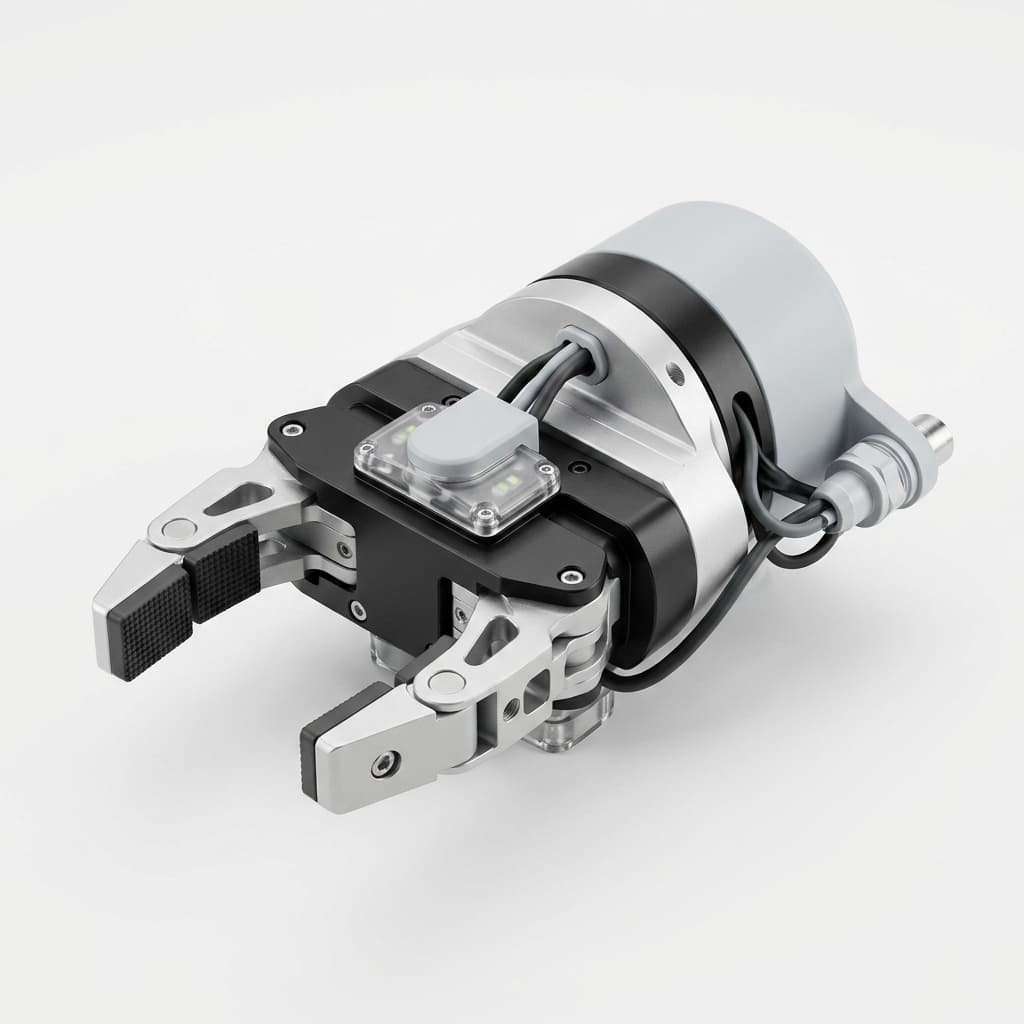
Custom CNC Machining for AI Vision-Guided EOAT: Calibration Stability and Procurement Guide
Prevent hand-eye calibration drift in vision-guided EOAT with CNC machined camera mounts, DFM rules, tolerance notes, and an RFQ checklist.
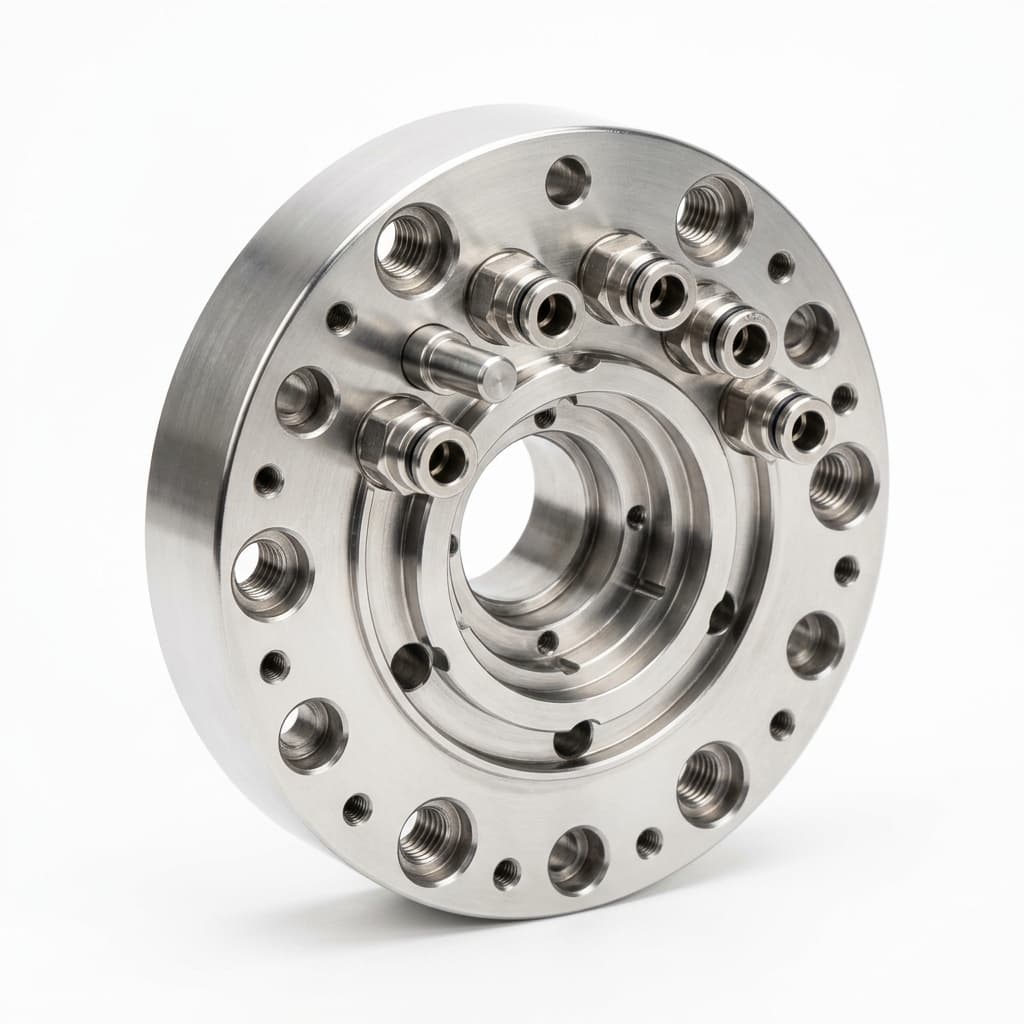
Robotic Automatic Tool Changers (ATC): Machining Tolerances and Procurement Specs for EOAT
Specify robotic Automatic Tool Changers for EOAT machining: repeatability, fail-safe locks, utility ports, payload moments, and supplier QA checks.
Cleanroom & ESD-Safe EOAT Machining: ISO 14644-1 Procurement Guide
Procurement guide to specify cleanroom and ESD-safe EOAT machining for ISO 14644-1 cells: compare finishes, risks, QA checks, and request DFM support.