
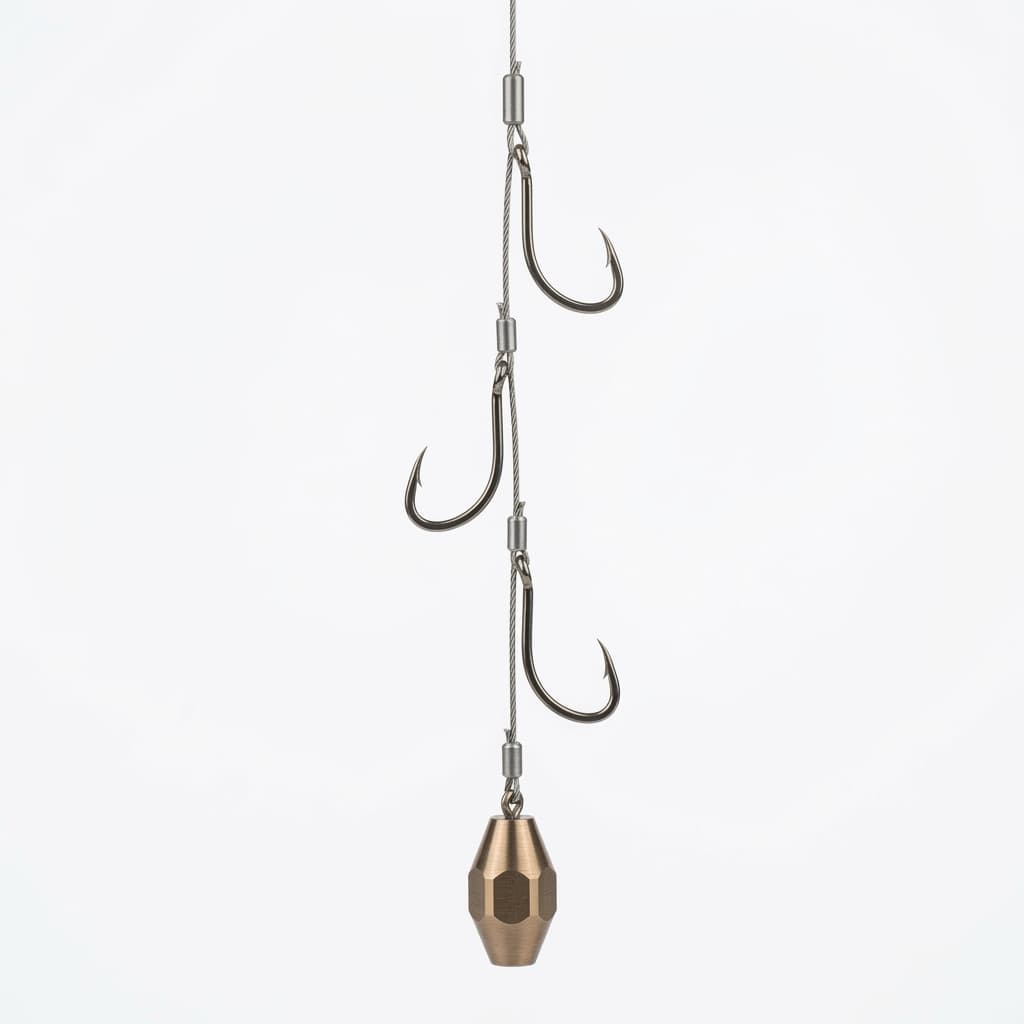
Weight Reduction in Custom EOAT: CNC Machining Strategies to Maximize Robot Payload
A comprehensive engineering guide on specifying lightweight End-of-Arm Tooling (EOAT). Discover CNC machining strategies, topology optimization, and materials to maximize payload.
Every gram on your End-of-Arm Tooling (EOAT) is a gram stolen from your robot's effective payload. For automation buyers, procurement teams, and robotics engineers, understanding how to strategically remove weight from CNC machined grippers is the fastest path to reducing cycle times, sizing down expensive robotic arms, and minimizing dynamic wear on joints. This guide explores the engineering physics, advanced material substitutions, and precision machining strategies required to optimize EOAT mass without sacrificing stiffness. Last Updated: June 23, 2026.
Key Conclusions for EOAT Weight Reduction
- Inertia is Often the True Bottleneck, Not Just Mass: Reducing weight at the extremities of the tool (furthest from the robot wrist) yields exponential benefits in reducing the moment of inertia, directly unlocking faster acceleration profiles.
- AL7075-T6 is the Optimal CNC Material for High-Stiffness/Low-Weight Ratios: Upgrading from AL6061 to AL7075 allows engineers to machine thinner wall sections and more aggressive pockets without reaching the fatigue limit or deflection boundary.
- Topology Optimization Requires Multi-Axis Machining: Simply drilling holes is insufficient; true weight reduction involves continuous 5-axis scalloping, isogrid pocketing, and leaving material only along the primary load vectors.
- Integrated Pneumatics Eliminate Parasitic Weight: Machining internal manifolds directly into the structural aluminum body removes the need for heavy brass fittings, exterior tubing, and complex mounting brackets.
- Hybrid Material Strategies Maximize ROI: The most cost-effective lightweight EOATs combine precision-machined aluminum mounting interfaces with Carbon Fiber Reinforced Polymer (CFRP) structural tubing.
The Engineering Physics: Why Payload Matters
Robots are specified by their maximum payload capacity at the wrist flange. However, this capacity must account for the combined mass of the part being handled, the gripper mechanism, the structural mounting plates, sensors, and pneumatics.
When an EOAT is over-engineered and machined from solid blocks of mild steel or un-optimized AL6061, it consumes a disproportionate amount of the available payload. For instance, if a 10 kg payload collaborative robot (cobot) is equipped with a 6 kg stainless steel gripper assembly, only 4 kg remains for the actual product. This often forces procurement teams to purchase the next size up in robot arm—dramatically inflating capital expenditure (CapEx) for the cell.
Furthermore, it is not merely the static mass but the dynamic moment of inertia. Mass located further from the robot's Axis 6 (the wrist flange) generates exponentially more torque during high-speed swings. Reducing weight at the tips of the gripper fingers is significantly more valuable than reducing weight near the mounting plate.
CNC Machining Strategies for EOAT Weight Reduction
To aggressively lightweight an EOAT, engineering design and CNC machining execution must work in tandem.
1. Topology Optimization and Advanced Pocketing
Topology optimization utilizes FEA (Finite Element Analysis) software to identify the primary load paths through a part. The software removes material from low-stress areas, resulting in organic, often web-like structures. While this is commonly associated with 3D printing, advanced 5-axis CNC machining can replicate these results using aggressive pocketing, isogrid ribbing, and thin-wall machining. By machining away "dead weight" between the structural nodes, mass can be reduced by 30-50% while retaining 95% of the original stiffness.
2. Upgrading to Aerospace Aluminum (AL7075-T6)
AL6061-T6 is the standard for general automation. However, its yield strength is roughly 276 MPa. Upgrading the specification to AL7075-T6 increases the yield strength to over 500 MPa. Because the material is significantly stronger, designers can specify thinner cross-sections and deeper CNC pockets without risking flex under load. The slightly higher raw material cost is easily offset by the performance gains in robot cycle time.
3. Integrated Manifold Machining
External pneumatic tubing, heavy brass push-to-connect fittings, and external solenoid valves add "parasitic mass" to the tool. Precision CNC machining allows for internal air channels (manifolds) to be gun-drilled or milled directly into the structural aluminum plates. This turns the structural chassis itself into the air distribution network, stripping away hundreds of grams of external clutter and dramatically reducing the tool's physical envelope, allowing it to fit into tighter machine tending spaces.
4. Hybrid Carbon Fiber and CNC Assembly
For very large EOATs (such as those used for palletizing or handling large automotive panels), pure aluminum becomes too heavy, even when optimized. The industry standard approach is a hybrid design: utilizing ultra-lightweight Carbon Fiber Reinforced Polymer (CFRP) tubes or plates for the long structural spans, connected by precision CNC-machined aluminum nodes, brackets, and robot wrist adapters. The CNC parts provide the necessary precision for locating pins and tapped holes, while the carbon fiber provides the rigid, lightweight spanning structure.
Evidence Matrix: Material Substitution vs. Weight
The following table demonstrates the impact of material selection on a standard 600 cm³ structural EOAT bracket.
| Material Grade | Density (g/cm³) | Yield Strength (MPa) | Approx. Mass (600 cm³) | Application Scenario |
|---|---|---|---|---|
| SUS 316L (Stainless) | 7.99 | 170 | 4.79 kg | Food/Pharma washdown only. Severe payload penalty. |
| Steel 1018 | 7.87 | 370 | 4.72 kg | High impact loading. Avoid if possible due to mass. |
| AL6061-T6 Solid | 2.70 | 276 | 1.62 kg | Baseline standard for general automation. |
| AL7075-T6 (Optimized) | 2.81 | 503 | ~0.95 kg (w/ pocketing) | High-speed pick & place, maximum payload recovery. |
| CFRP + AL Node Hybrid | ~1.60 (composite) | >600 (directional) | ~0.65 kg | Very large spans, palletizing, long reach tools. |
Source data cross-referenced with standard material property databases and industry guidelines for robotic payloads.
Engineering & Procurement Checklist for Lightweight EOAT
When specifying a custom machined EOAT, procurement teams and engineers should run through this checklist to ensure weight has been fully optimized before manufacturing begins.
- Center of Gravity (CG) Check: Has the CG been calculated and positioned as close to the robot's wrist flange (Axis 6) as physically possible?
- Material Upgrade Assessment: Can the thick AL6061 plates be replaced with thinner AL7075 plates while maintaining identical stiffness?
- Pneumatic Integration: Have external hoses and brass manifolds been eliminated in favor of internal CNC-machined air channels?
- Topology Review: Has the CAD model been reviewed to pocket out non-structural "dead zones" in the mounting plates?
- Component Substitution: Can heavy steel fasteners and locating pins be swapped for titanium or high-strength aluminum equivalents where shear loads permit?
- Inertia Calculation: Has the dynamic moment of inertia been simulated at max robot acceleration, not just the static mass?
Case Study: Lightweighting an Automotive Palletizing Gripper
To illustrate the financial and performance impact of these strategies, consider a recent application involving the automated palletizing of heavy automotive engine blocks. The initial EOAT design—machined entirely from solid AL6061 plates with external brass pneumatic manifolds—weighed 18.5 kg. Combined with a 25 kg engine block, the total payload was 43.5 kg.
This forced the procurement team to specify a 50 kg payload industrial robot, which came with a base cost of approximately $65,000, required a massive concrete floor foundation, and consumed significant power during high-speed cycle swings.
Our engineering team performed a Design for Manufacturability (DFM) and lightweighting review:
- Chassis Redesign: The thick AL6061 main plate was replaced with a topology-optimized AL7075-T6 chassis. We CNC machined aggressive isogrid pockets into the non-load-bearing areas, reducing the chassis weight by 45% without compromising torsional stiffness.
- Manifold Integration: The external brass fittings, copper tubing, and bulky external solenoid valves were completely eliminated. We gun-drilled internal pneumatic channels directly through the AL7075 chassis, effectively turning the structural plate into an integrated air manifold.
- Hybrid Extensions: The long reach arms, originally made of steel to prevent deflection, were replaced with Carbon Fiber Reinforced Polymer (CFRP) tubes bonded to precision CNC-machined aluminum interface nodes.
The Result: The final EOAT weighed only 8.2 kg. The total combined payload dropped to 33.2 kg. This allowed the client to downsize the robot to a 35 kg payload model, saving $18,000 in immediate CapEx. Furthermore, the reduced moment of inertia allowed the smaller robot to accelerate 15% faster, yielding an additional 400 parts per shift in throughput.
Application Boundaries and Limitations
While weight reduction is generally beneficial, there are specific scenarios where aggressive lightweighting is contraindicated:
- Vibration Damping: Mass inherently dampens high-frequency vibration. In precision CNC machine tending or delicate assembly where vibration settling time is critical, removing too much mass from the EOAT can result in "chatter" or extended settling delays at the end of a robot move.
- High-Impact Forging/Casting Handling: When handling extremely rough, heavy payloads (like hot steel forgings), the EOAT must survive significant shock loading. Thin-wall AL7075 or brittle carbon fiber may fracture under repetitive shock; high-mass steel or ductile alloys are required here.
- Cost vs. ROI Limit: 5-axis topology-optimized machining and hybrid carbon-fiber assemblies carry higher manufacturing costs. This cost is easily justified if it saves $20,000 by allowing the use of a smaller robot arm. It is not justified if the robot is already vastly oversized for the application.
FAQ: EOAT Weight Reduction and Machining
Q: Can 3D printed EOATs entirely replace CNC machined ones for weight reduction? A: No. While polymer 3D printing (FDM/SLA) is excellent for ultra-lightweight, low-stress applications (like vacuum cup manifolds for paper handling), it lacks the dimensional stability, thread strength, and rigidity required for heavy industrial manipulation, machine tending, or precision assembly. A hybrid approach—3D printed fingers on a CNC aluminum chassis—is often best.
Q: How much does AL7075 cost compared to AL6061? A: Raw AL7075 typically costs 40-60% more than AL6061. However, because you use less material volume (due to thinner walls) and the material machines excellently, the final part cost difference is usually negligible compared to the operational savings of a faster robot cycle.
Q: Are internal machined air channels difficult to maintain? A: No, provided they are designed correctly with cross-drilled holes plugged securely (using threaded plugs, not press-fits). They are actually easier to maintain because there are no external hoses to snag, pinch, or degrade under UV/chemical exposure.
Q: Can we use plastics like Delrin (POM) to reduce structural weight? A: Delrin (POM) is fantastic for contact pads to prevent marring, but its low modulus of elasticity (stiffness) means it flexes significantly under load. It should not be used as the primary structural frame for heavy payloads.
References and Verifiable Sources
- Robotic Industries Association (RIA) / A3: Guidelines on robot payload utilization and the impact of moment of inertia on joint wear.
- Markforged Engineering: Comparative analysis of additive manufacturing versus subtractive CNC machining for EOAT structural stiffness.
- Festo Didactic: Standards for integrating pneumatics and reducing parasitic mass through manifold design in automated handling systems.
- ASS End of Arm Tooling: Application data on hybrid CFRP and aluminum node construction for automotive palletizing tools.
- MatWeb Material Property Data: Verified density and yield strength metrics for AL6061-T6, AL7075-T6, and austenitic/martensitic stainless steels.
Optimize Your Robot's Performance
Are you losing valuable payload capacity to over-engineered, heavy gripper designs? Our CNC machining experts specialize in manufacturing topology-optimized, lightweight EOAT components that let your robots run faster and lift more.
If you have an existing design that needs to go on a diet, or you need precision manufacturing for AL7075 and hybrid tooling, we can help.
Contact our engineering team today for a DFM review on your EOAT components.
Author

Categories
More Posts
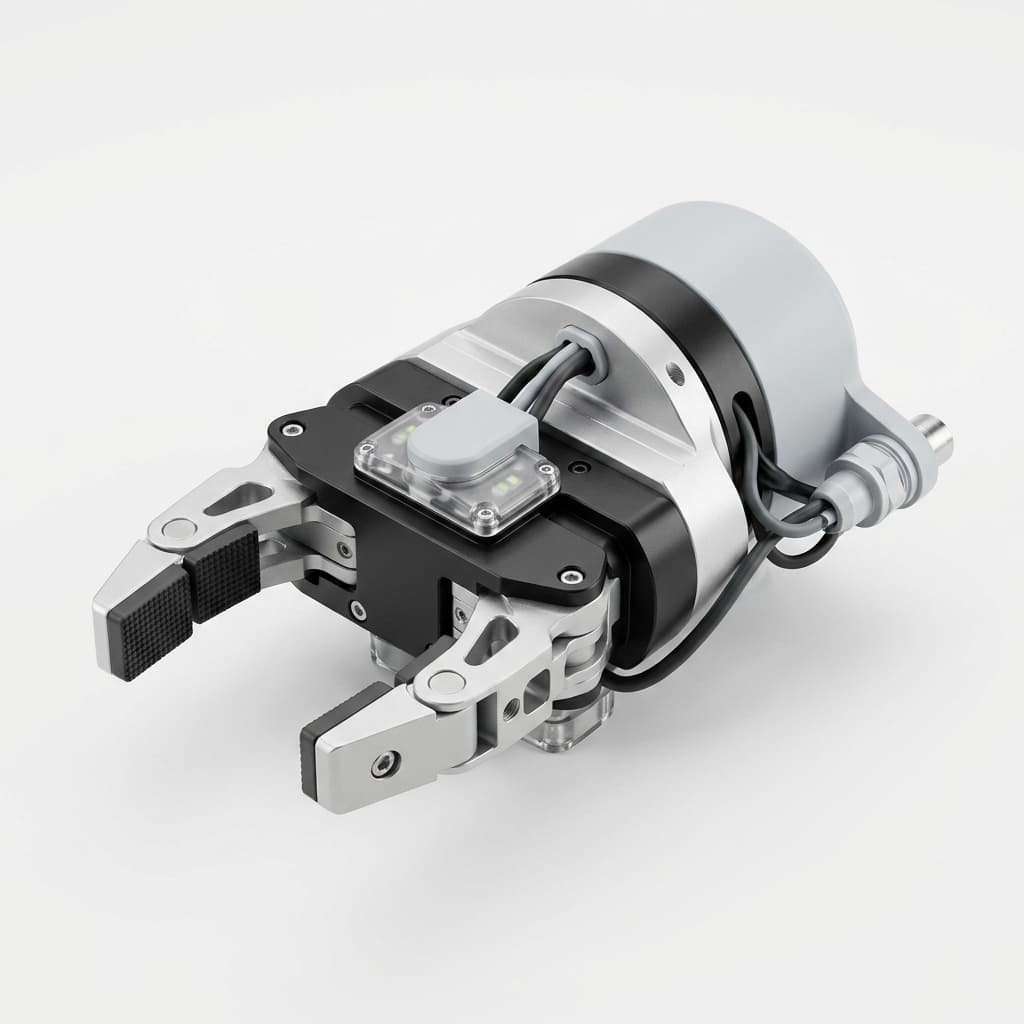
Custom CNC Machining for AI Vision-Guided EOAT: Calibration Stability and Procurement Guide
Prevent hand-eye calibration drift in vision-guided EOAT with CNC machined camera mounts, DFM rules, tolerance notes, and an RFQ checklist.
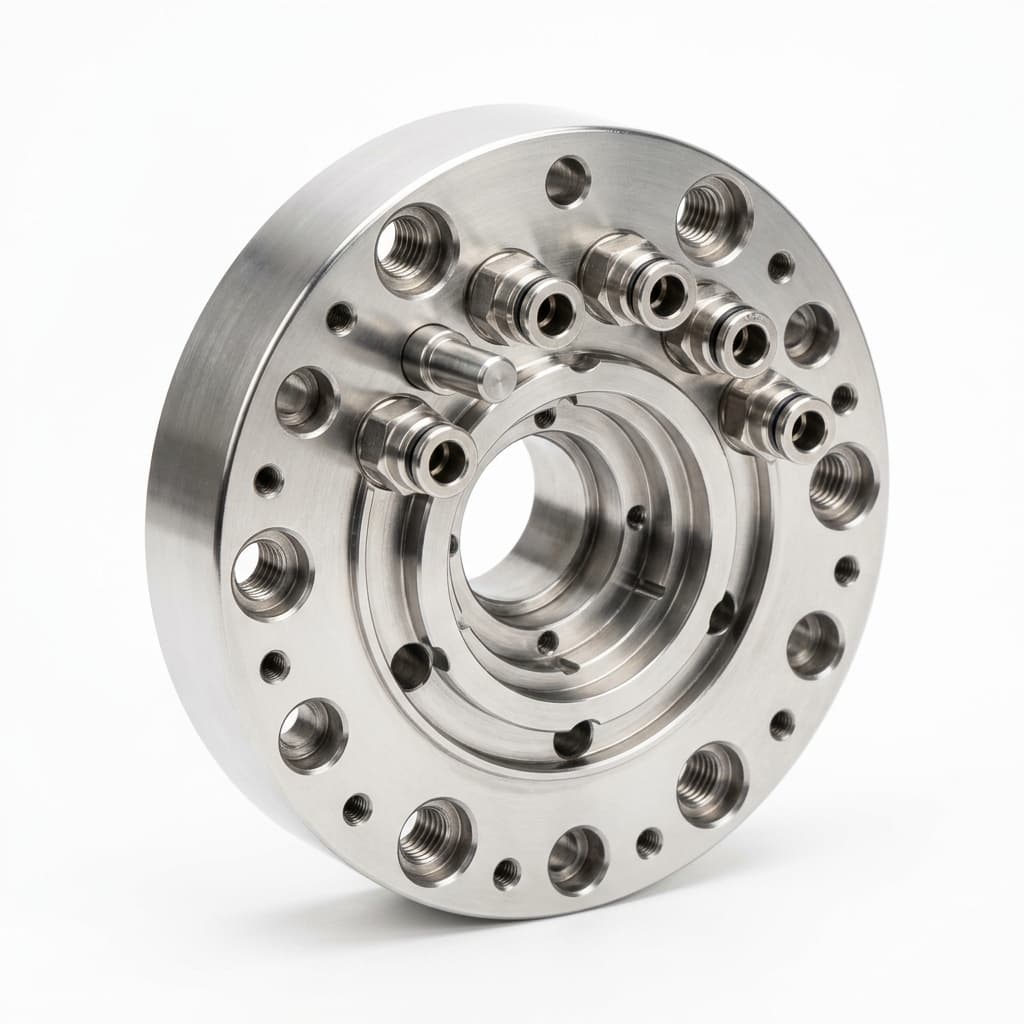
Robotic Automatic Tool Changers (ATC): Machining Tolerances and Procurement Specs for EOAT
Specify robotic Automatic Tool Changers for EOAT machining: repeatability, fail-safe locks, utility ports, payload moments, and supplier QA checks.
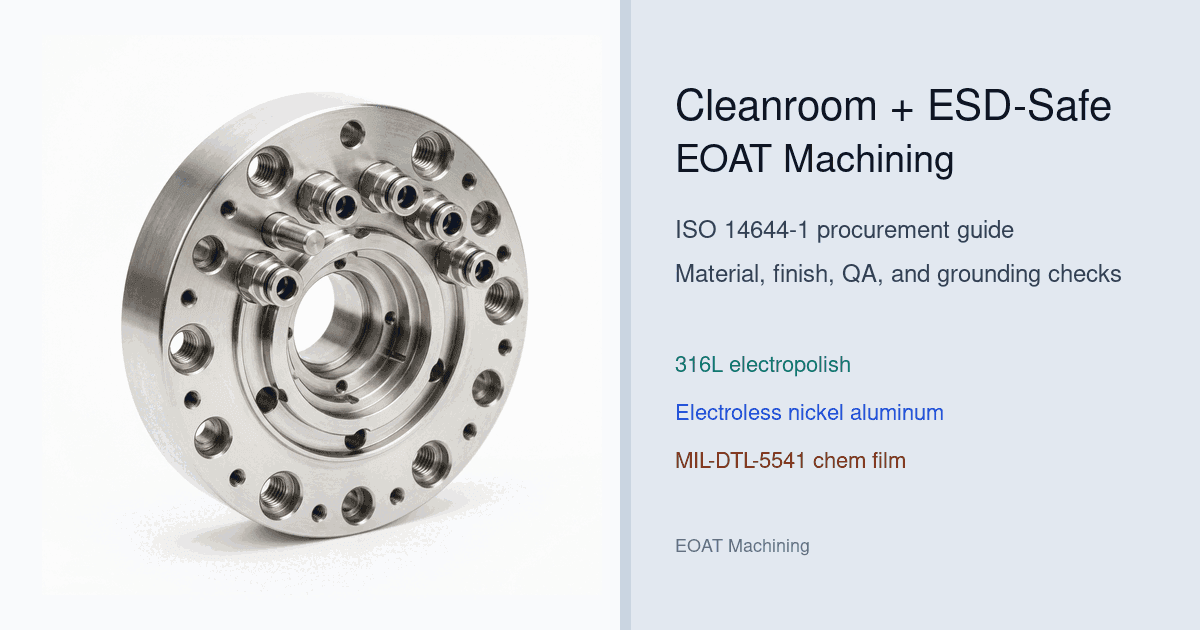
Cleanroom & ESD-Safe EOAT Machining: ISO 14644-1 Procurement Guide
Procurement guide to specify cleanroom and ESD-safe EOAT machining for ISO 14644-1 cells: compare finishes, risks, QA checks, and request DFM support.